One developer is currently available to jump onto a project!
This Is How Our Engineers Build KMP Apps
This Is How Our Engineers Build CMP Apps
How to Review and Test AI-Generated Code in Your Mobile App
An AI coding agent can put together a feature in a couple of hours. If your engineers still have to figure out how a third-party API behaves, which product rules apply, and how to verify the change, the delivery date can still be hard to call.
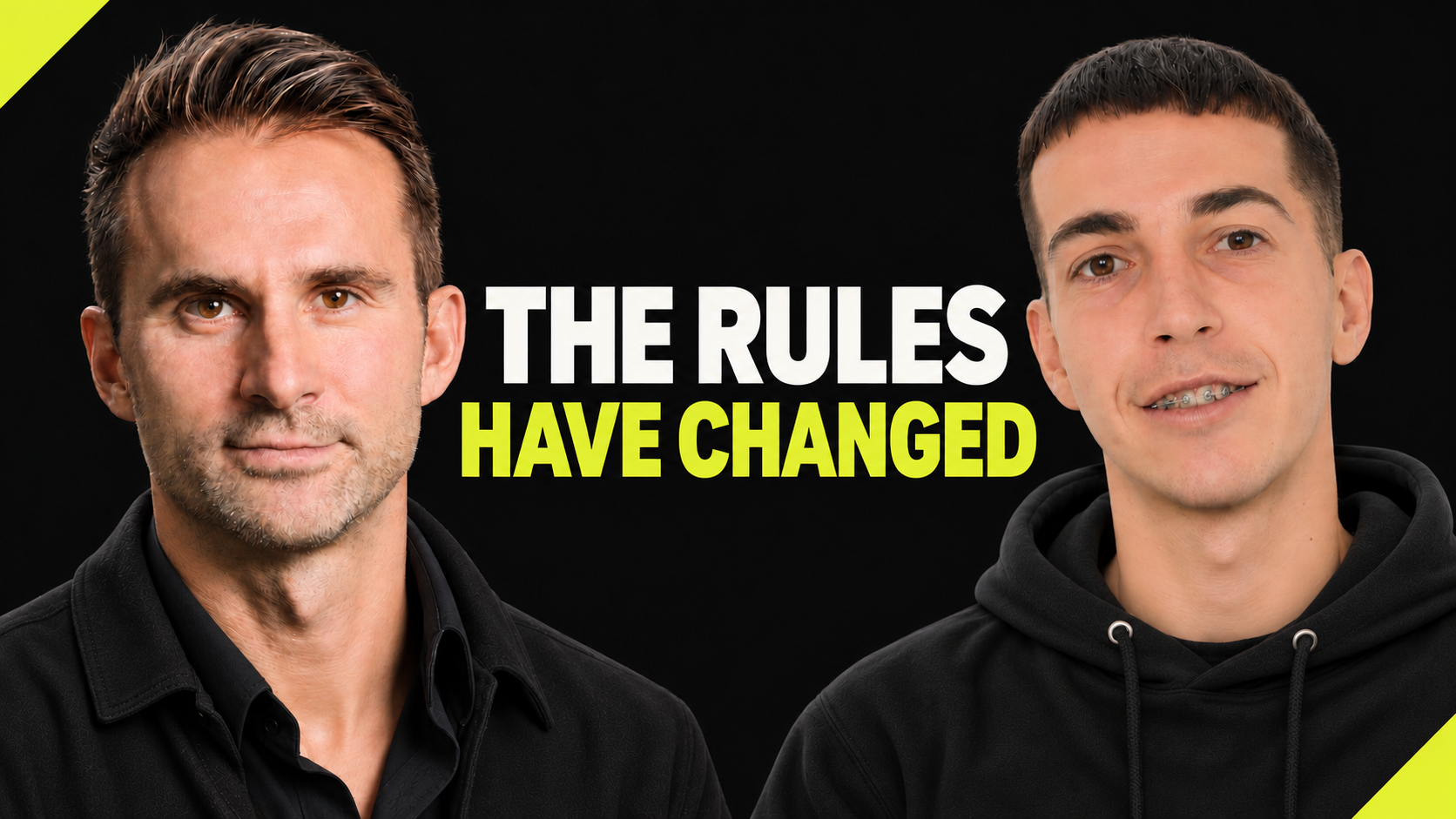
I talked about this with Dmitry Zolotaryov, who manages engineers building insurance products at Shepherd. He explained how quickly his engineers could get up to speed on an unfamiliar part of the codebase, and how much longer it took to understand the business behind it.
If you're bringing AI tools or external engineers into an existing mobile app, that gap is a good place to start.
What should an AI coding agent know about your app?
When Dmitry moves engineers between his two teams, they can ask an agent to summarize the last two months of pull requests. That gives them a way to see what changed, how the team approached it, and where problems came up.
At Shepherd, getting comfortable with insurance concepts such as how pricing works can still take engineers about three months. Reading the PRs gives them a starting point for asking better questions about those rules.
We've seen the same kind of gap on mobile projects. A function can look odd until you find out which business requirement led to it.
Imagine asking an agent to simplify a checkout flow where users can resume an interrupted payment.
Before I give it that task, I want to know which states the app needs to restore and what the user should see if the payment has already gone through. Those details belong in the task and in the checks we run before release.
When is a written technical plan worth the time?
There are two examples where the lead engineer needs to write down the approach and share it before implementation:
- a database schema change
- and an API change that another team needs to know about.
The discussion gives people a chance to spot missing context or unnecessary complexity while the design is still easy to change.
For a mobile API change, I'd use that conversation to check what happens to older app versions that are already in users' hands and who needs to coordinate the rollout.
How do you estimate software delivery with AI coding agents?
I asked Dmitry about estimates because the business still needs them. If product is planning what comes after a new feature, it needs some idea of when engineers will be available to start the next thing.
His suggestion for work that’s hard to estimate was pretty simple. Once you’ve broken it down, pick a couple of early tasks that are safe to reverse.
Run them with an agent and see how long it takes to get them merged. Now you have something from your own project to work with when you estimate the rest.
I liked that he measured all the way to merge. If an agent puts up a PR quickly and the engineer then spends an afternoon figuring out how to verify the integration, that afternoon belongs in the estimate.
A couple of tasks give you a starting point. If the next set involves an unfamiliar API or a more involved test setup, there’s still uncertainty to account for.
To see where that gap shows up in your own codebase, pick a recent PR and walk through it with your team using our PR Review Checklist for Mobile Teams Using AI.

How do you test AI-generated code when the team is shipping more of it?
At Shepherd, the team was moving quickly and introducing bugs. They rolled out an end-to-end testing framework, and hardly anyone used it.
Everyone was already using Claude, though, so they added a rule for it to write an end-to-end test whenever a change added to or modified the UI.
They kept the set of tests that runs on every pull request small, covering the critical flows that always need to work. The broader suite runs roughly every hour or two.
That gives the team a way to check the essential paths on every PR and still look for regressions elsewhere without running the whole suite on each change.
Dmitry estimated that Shepherd was shipping about four to five times as much code as before and that incidents were trending down over the same period. That was his observation from the team, and the figure refers to the volume of code shipped.
What interested me was the workflow change. Writing the test became part of preparing the UI change, so engineers had a test to look at alongside the implementation.
This came up for me from the mobile side. At Aetherius, AI has made it easier for us to add unit tests to client apps.
Getting end-to-end testing in place takes more work, especially when you need buy-in across client teams. I still see value in unit tests, and I also think there’s a good case for investing in end-to-end coverage for the flows users depend on.
A unit test can tell you whether a function was called. If the question is whether someone can complete a flow in the app, I want a test that actually goes through it.
If you’re curious where we use AI on mobile projects, here’s how we approach AI-assisted mobile app development at Aetherius, from implementation to testing.
When does AI-generated code still need a human review?
Engineers use AI to read a diff, leave comments, and suggest fixes. An agent can then pick up those comments and make changes while the engineer is doing something else.
Shepherd had also been experimenting with allowing a merge when Cursor’s AI reviewer approved the PR. For changes to critical systems, someone from the team that owns the code still needed to review it.
Once a team can open more PRs in a day, it has to decide where an engineer’s time matters most. I’d want the person who knows the system to spend that time on questions the diff alone can’t answer.
Does this match the business rule?
What happens to the existing flow when this change goes out?
How would we know if we broke it?
One example from our mobile app portfolio is our connected fitness work. AI helped us narrow down why third-party training apps couldn’t discover a Bluetooth device, and our engineer tested the proposed fix on the tablet.
See how we investigated the Bluetooth discovery bug.
Where should you start if your team keeps rewriting AI-generated code?
I'd start with a recent pull request that took longer than expected.
Look at what the agent knew when it started, what the engineer had to correct, and what it took to verify the result on a device.
If the rework came from a product rule that was missing from the task, capture it where the next engineer and agent can find it.
If the reviewer had to manually repeat a critical flow to know whether the fix worked, that gives you a concrete candidate for test coverage.
If you have a PR like that, talk to us about your mobile codebase.
Tell us what the change was meant to do and where your team lost time. We can use that example to discuss whether clearer project instructions, better test coverage, or hands-on engineering support would help.
We get into the details in the full conversation on YouTube.
I often share stories from our mobile projects and my take on what’s changing in development. If that’s your thing, follow me on LinkedIn.
For more on how I use AI in coding and what I’m learning along the way, subscribe to Coffee & Tech, my newsletter.
Hope this was helpful and gave you a few ideas to try on your next mobile feature!
to Build Your App?