One developer is currently available to jump onto a project!
This Is How Our Engineers Build KMP Apps
This Is How Our Engineers Build CMP Apps
Q3 at Aetherius: New Clients, Technical Progress and What Comes Next

The third quarter of 2026 was a busy one for Aetherius.
We started working with two new clients, expanded our practical experience with Compose Multiplatform and AI-assisted development, shared more of our technical knowledge with the mobile community, and opened several conversations that could shape our growth in the coming quarters.
However, the most important part of this quarter was not simply the number of new projects or published resources. It was the way those opportunities reached us.
Two New Mobile Development Projects Through Client Referrals
During Q3, we started two new client projects: one in fintech and another in retail.
Three Aetherius developers are now working full-time on one of these projects, while another two developers have joined the second. The teams include Android, iOS, and Flutter engineers, reflecting the broader mobile expertise that our clients require beyond any single technology.
Both clients came to us through recommendations.
For us, this is one of the strongest indicators that we are building the company the right way. When previous clients recommend Aetherius to another company, they are putting their own reputation behind that recommendation.
Both engagements reinforce the type of company we want Aetherius to remain: a specialized mobile engineering partner that can join an existing organization, understand its product and codebase, and contribute without creating unnecessary management overhead.
Migrating Znam Majstora From KMP to Compose Multiplatform
One of the most technically demanding projects we documented during Q3 was the migration of the Znam Majstora application from Kotlin Multiplatform to Compose Multiplatform.
The application already shared its business logic through KMP, while Android and iOS had separate user interfaces. The next step was to move 12 production screens into shared Compose Multiplatform code.
An early attempt to move too much of the Android UI into commonMain resulted in more than 10,000 compile errors. While that number looked dramatic, the errors pointed to several distinct problems: incorrect imports, unsupported libraries, Android-specific behavior, native dependencies, lifecycle differences and unclear expect/actual boundaries.
The most difficult work appeared where shared code met native platform behavior. Firebase configuration, iOS dependencies, permissions and lifecycle handling required more investigation than the Compose UI itself.
The migration was completed in two weeks, but the main lesson was not that CMP migrations are always fast. The result depended heavily on the existing architecture, the team’s familiarity with the codebase and its ability to work across both Android and iOS constraints.
Claude Code supported the team by grouping errors, comparing configurations and helping engineers investigate unfamiliar platform APIs. It was most useful when assigned a narrow problem with a clear reference and validation step. Architecture, platform decisions, implementation review and final verification remained the responsibility of the engineering team.
We published a detailed breakdown for teams considering a similar migration:
Read our AI-assisted KMP-to-CMP migration breakdown
Sharing Our Kotlin Multiplatform Experience
Q3 also gave us several opportunities to share lessons from production projects.
Aleksa spoke at the Serbia Kotlin User Group meetup in Belgrade about Kotlin-Swift Interoperability: Lessons from Real Projects.
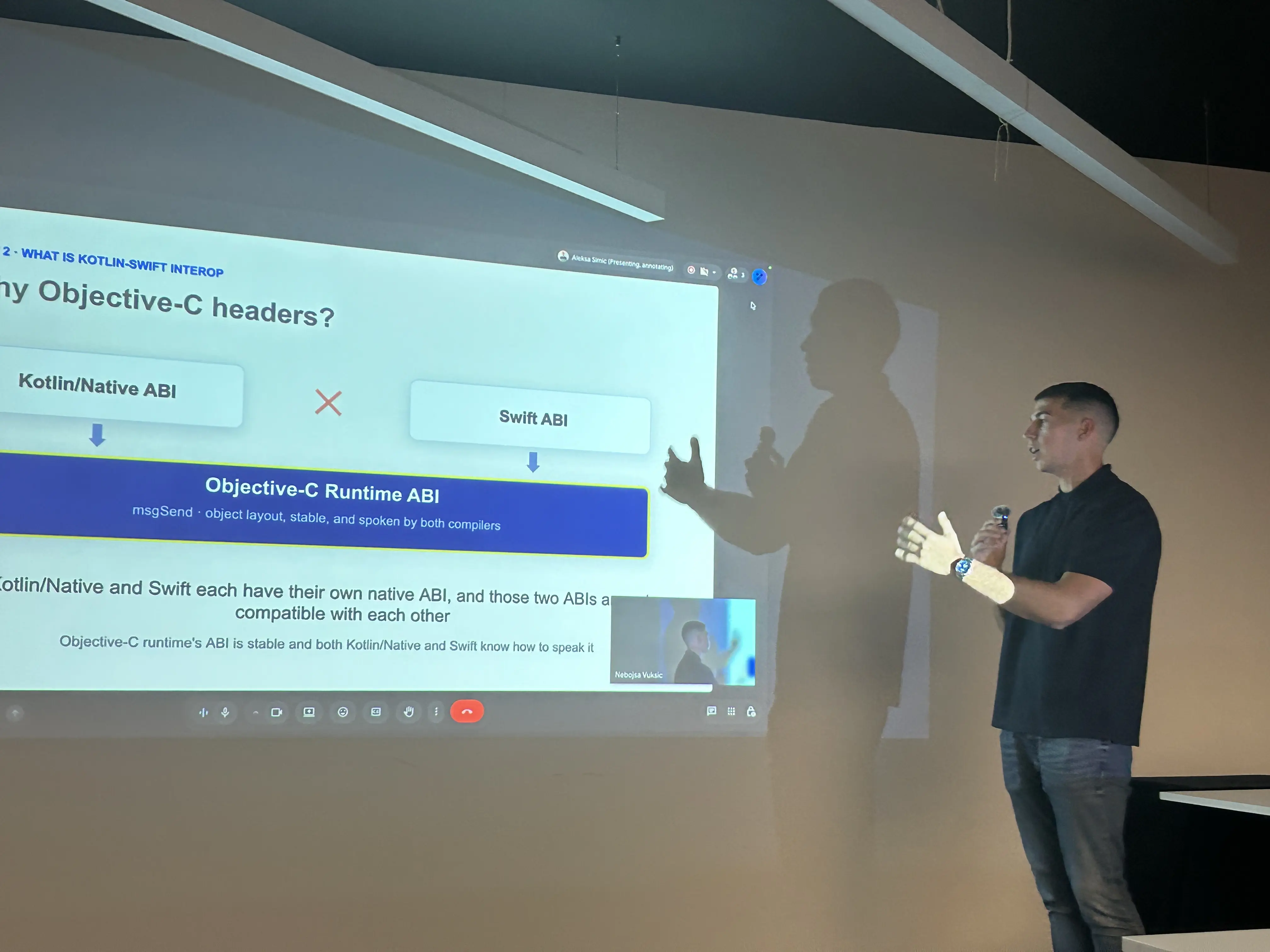
The presentation covered how generated Kotlin APIs are consumed from iOS, the interoperability problems our iOS engineers encountered after introducing Kotlin Multiplatform into production projects, and the tools and workarounds the team adopted over the past four years.
These discussions matter because KMP adoption cannot be evaluated only through the percentage of shared code. Teams also need to consider how the shared module affects the iOS development experience, API usability, debugging, dependency management and long-term ownership of both platforms.
We also continued exploring less conventional approaches to cross-platform development through a conversation with Pierluigi Cifani, co-founder of The Left Bit and Semantico.AI, about using Swift for Android while working on the Polymarket application.
You can watch the full video here
More Than 800 Developers Are Using Our KMP Template
We continued sharing the production-ready Kotlin Multiplatform template used by our own engineers.
The template includes clean architecture, shared business logic, Firebase, Ktor and Koin. It is intended to give mobile teams a practical starting point for a new KMP application or a reference they can compare with their existing project structure.
More than 800 developers have accessed the template so far.
For us, open resources like this are not separate from client work. They help us organize and explain the architectural decisions we make in production while giving other teams something concrete they can evaluate before speaking with us.
Helping Clients Understand How We Work Before a Project Starts
We also continued investing in technical video content during Q3.
One of the latest videos explains when Apple and Google payment fees apply, which alternatives are currently available and what product teams should consider before changing an application’s payment flow.
Watch: How to Avoid App Store and Google Play Fees in 2026
We plan to invest more in YouTube during Q4.
Choosing an external engineering partner requires trust, particularly when that partner will work inside an existing codebase or communicate directly with other stakeholders. We know how important it is for clients to understand who they may be working with before a contract is signed.
Video gives potential clients and partners an opportunity to see how we approach technical problems, explain tradeoffs and think about mobile development before we begin working together.
If you are interested in practical discussions about mobile engineering, KMP, Compose Multiplatform, iOS, Android, and AI-assisted development, subscribe to our YouTube channel to follow our upcoming videos.
Building New Partnerships Beyond Q3
During the quarter, we also visited several business partners in person.
One of those conversations led to an initial agreement around expanding our business into another continent. It is still too early to share details, but we expect to say more about this development during Q4.
Our first Q4 stop will be the How to Web Conference in Bucharest from October 6 to 8. Later in October, we will also be in Dubai for a business meetup.
If you will be in Dubai around that time, follow Aleksa on LinkedIn for the confirmed dates and meeting details. We would be glad to meet, exchange experiences, and discuss potential collaboration in person.
What Comes Next for Aetherius in Q4
Our priority for Q4 is to turn the momentum from this quarter into new long-term partnerships.
Aetherius continues to grow, but we still have capacity for additional mobile projects. We can support companies that need individual Android or iOS engineers, cross-platform expertise, additional capacity inside an existing team, or a broader mobile engineering partner.
We are particularly interested in speaking with companies planning their 2027 mobile roadmap now rather than waiting until development capacity becomes an urgent problem.
If your company is looking for a mobile engineering partner, or you are planning a mobile project for 2027, contact the Aetherius team. An early conversation gives both sides enough time to understand the technical requirements, team structure and expertise the project will need.
to Build Your App?