One developer is currently available to jump onto a project!
This Is How Our Engineers Build KMP Apps
This Is How Our Engineers Build CMP Apps
10 Best Nearshore Mobile Development Companies in Europe for 2026
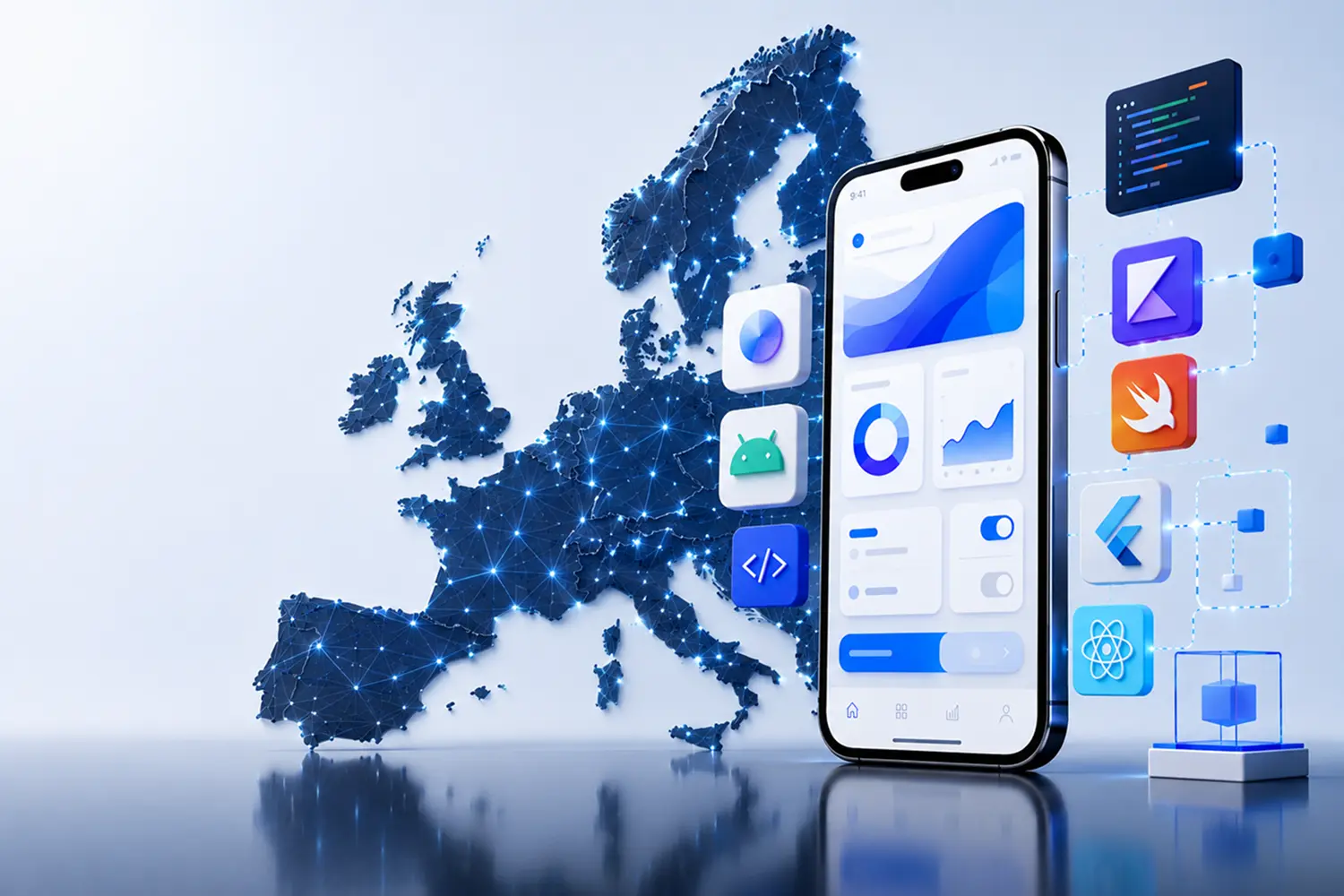
Hiring a nearshore mobile development company is not simply a way to add developers at a lower rate. The decision is whether an external team can understand your architecture, work effectively with internal engineers, and increase delivery capacity without creating additional supervision and coordination work.
This guide compares ten European nearshore mobile app development companies worth evaluating in 2026. They differ in mobile specialization, technology coverage, engagement models, and experience with existing applications, so the right choice depends on whether you need individual engineers, team augmentation, a dedicated mobile team, or complete mobile app development services.
Key Takeaways
- Aetherius is a strong option for mobile team extension, existing applications, and Kotlin Multiplatform or Compose Multiplatform work.
- Droids On Roids provides broad native and cross-platform mobile product development from Poland.
- Miquido combines mobile development with broader AI and product engineering capabilities.
- Infinum is suited to larger product programs, modernization, and multidisciplinary delivery.
- STRV is positioned toward premium digital products requiring strategy, design, mobile engineering, and QA.
- Netguru is relevant when mobile development is part of a wider enterprise transformation or multidisciplinary program.
- DECODE emphasizes dedicated native iOS and Android teams for technically complex applications.
- Tapptitude is a mobile-first product studio suited to product discovery, new application development, and scaling.
- LeanCode provides a clearly differentiated option for enterprise Flutter development.
- Ackee is relevant for native mobile development and Kotlin Multiplatform projects.
The right nearshore development partner depends on the application you already have, the architecture you want to maintain, the technology stack your internal team can own, and the level of responsibility you expect the external engineers to assume.
2026 European Mobile Development Companies at a Glance
This comparison should be treated as the beginning of a shortlist, not as a substitute for technical due diligence. Before hiring nearshore mobile developers, verify the people who would actually join your project, not only the capabilities described on the company website.
How We Evaluated European Mobile Engineering Partners
Generic lists of nearshore software development companies often prioritize company size, overall review count, or the breadth of the service catalog. Those signals can be useful, but they do not show whether a provider can safely take responsibility for a production Android or iOS application.
We used five mobile-specific criteria to select these European nearshore development companies.
1. Mobile Technology Expertise
A credible nearshore mobile development company should explain which mobile technologies it uses and where the limits of those technologies appear. We looked for demonstrated coverage of native Android, native iOS, Kotlin Multiplatform, Compose Multiplatform, Flutter, or React Native rather than a generic claim to build “applications for every platform.”
Technology breadth is not automatically better. A focused Kotlin Multiplatform development company may be a better choice for a KMP migration than a much larger general software consultancy. Likewise, an experienced Flutter development company in Europe may be more suitable when the product and internal team have already committed to Flutter.
2. Team Integration and Engagement Options
Companies do not all need the same form of external support. Some need to hire one senior Android engineer. Others need mobile development team augmentation across Android and iOS. A company without an internal mobile organization may need a dedicated mobile development team in Europe that owns discovery, architecture, implementation, QA, release, and maintenance.
The selected providers offer at least one relevant nearshore engagement model: team extension, staff augmentation, a dedicated team, or complete product delivery. The important question is not which model sounds most comprehensive, but which model matches the client’s engineering structure and ownership expectations.
3. Relevant Mobile Projects and Public Evidence
We looked for public mobile service pages, identifiable mobile projects, technical content, or verified third-party reviews. A portfolio logo alone is not enough to establish what a company actually delivered. Buyers should review detailed project evidence, such as a company’s mobile app development portfolio, and ask which platform components the nearshore team owned, which engineers remain available, and what architectural or delivery constraints shaped the work.
4. Architecture, Modernization, and Long-Term Maintenance
Building a new interface is only one part of mobile engineering. Enterprise applications accumulate platform dependencies, release constraints, analytics integrations, security requirements, architectural decisions, and technical debt. A suitable mobile app modernization company must be able to reason about those constraints before proposing a rewrite or migration.
We therefore favored European mobile app development companies that publicly address existing applications, refactoring, migration, maintenance, platform-specific engineering, or long-term product development.
5. Location and Nearshore Collaboration Fit
All companies in the final shortlist have a meaningful engineering base in Europe. That matters because nearshore software development in Europe is defined by more than the legal location of a sales office. The delivery team, working hours, communication structure, and contractual setup must support the collaboration model the buyer expects.
1. Aetherius: KMP Expertise and Mobile Team Extension From Serbia
Aetherius is a specialized mobile engineering company based in Niš, Serbia. It helps product companies and software agencies build, extend, modernize, and maintain native and cross-platform applications.
Its technical scope includes native Android, native iOS, Kotlin Multiplatform, Compose Multiplatform, Flutter, and React Native. This makes Aetherius relevant when a client has not yet selected a cross-platform approach, as well as when an existing architecture already determines the technology. The company’s positioning is not that KMP is universally better than native development, Flutter, or React Native. The appropriate choice depends on the existing codebase, platform integrations, performance constraints, internal skills, migration risk, and long-term ownership model.
Aetherius can provide an individual engineer, mobile development team augmentation, a dedicated mobile development team, or complete mobile product delivery. This flexibility is particularly useful for organizations that already have an internal engineering team but need additional senior mobile capacity or expertise in a specific stack.
Kotlin Multiplatform and Compose Multiplatform are important differentiators. Aetherius has practical experience with shared business logic, shared UI, native iOS integration, Android integration, platform-specific code, Firebase, lifecycle differences, CocoaPods, Swift Package Manager, and expect/actual implementations. Its public Kotlin Multiplatform for Enterprises page explains the enterprise use case, while its Compose Multiplatform development services page covers shared UI delivery. Its Clutch profile provides independent client-review evidence.
Best fit: Mid-sized and enterprise product companies, software agencies, and engineering teams that need nearshore mobile developers for an existing codebase, KMP/CMP adoption, modernization, or long-term team extension.
Potential limitation: Aetherius is a focused mobile engineering company rather than a large general-purpose transformation consultancy. An organization looking for a broad standalone data, cloud, DevOps, or machine-learning program may need a larger multidisciplinary provider.
2. Droids On Roids: Full-Cycle Native and Cross-Platform Engineering
Droids On Roids is a Polish mobile and web development company headquartered in Wrocław. It is now part of the Apadmi Group and covers the product lifecycle from discovery and design through engineering and post-launch development.
Its publicly listed mobile capabilities include native Android with Kotlin, native iOS with Swift, Flutter, Kotlin Multiplatform, and React Native. The company also provides backend, cloud, product discovery, and UX/UI capabilities. This breadth makes Droids On Roids a practical candidate when a buyer wants one European nearshore development company to cover the complete mobile product rather than augment only one platform team.
Because the company works across native and cross-platform development, buyers should still ask how it would choose between Flutter, KMP, React Native, and separate native applications for the specific product. The answer should be grounded in platform requirements, performance, existing architecture, hiring plans, and expected maintenance, not in whichever team happens to be available.
Best fit: Companies looking for an established nearshore mobile development team that can support product discovery, design, native or cross-platform implementation, and subsequent application development.
Potential limitation: A broader full-product structure may be more than a client needs when the requirement is limited to one specialist joining an established internal team.
3. Miquido: Mobile Product Engineering With Broader AI Capabilities
Miquido is a software development company headquartered in Kraków, Poland. Its mobile offering includes native Android and iOS development as well as Flutter, React Native, and Kotlin Multiplatform. The company also has a broader AI and product-engineering practice, making it relevant when mobile is one component of a larger software system.
The combination can be valuable for AI-enabled mobile applications, where the mobile client must integrate with model APIs or AI-backed services while preserving predictable product behavior. In this type of project, the partner must address latency, error handling, privacy, fallbacks, observability, and user override flows, not merely add an AI interface to an existing app.
Miquido publicly lists its native and cross-platform technologies on its company website and maintains dedicated material about Flutter, React Native, and Kotlin-based development. Its breadth makes it a stronger candidate for larger initiatives, but buyers should establish which capabilities would actually be assigned to their engagement.
Best fit: Enterprise mobile applications that require product engineering, cross-platform development, backend integration, or AI-enabled functionality within the same broader engagement.
Potential limitation: Miquido is not exclusively a mobile engineering company. If the requirement is narrowly focused on adding one or two mobile specialists to an existing team, compare its proposed delivery structure with a smaller mobile-focused provider.
4. Infinum: Large-Scale Product Development and App Modernization
Infinum is a Croatian-founded product development company with a broad mobile and web engineering practice. Its mobile offering covers Android, iOS, and cross-platform applications, alongside design, backend development, QA, consulting, and ongoing product work.
For companies evaluating mobile app development outsourcing in Europe, Infinum is relevant because it supports both studio-team and extended-team engagement styles. It also publicly addresses application optimization, code refactoring, maintenance, and improvement of existing products. Those capabilities matter when the actual requirement is not a greenfield build but a mobile app modernization program with accumulated technical debt.
The company describes its Android, iOS, and cross-platform services on its mobile and web development page and its cross-platform development page. Its scope makes it suitable for organizations that want design and engineering under one provider.
Best fit: Larger mobile products, multidisciplinary product development, modernization, and organizations that want a studio team or extended development team.
Potential limitation: Buyers seeking a highly specialized technology partner should confirm the depth and availability of engineers in the exact stack rather than relying on Infinum’s overall service breadth.
5. STRV: Premium Mobile Product Strategy, Design, and Delivery
STRV is a Prague-based digital product company that designs, builds, and scales mobile and web products. Its services include mobile engineering, product management, UX/UI design, QA, web development, and data-related capabilities.
STRV is best understood as a premium product partner rather than a simple source of outsourced mobile developers. That distinction matters. A company looking to hire mobile app developers in Europe for a well-defined internal backlog has a different need from a company looking for an external partner to challenge the product concept, design the experience, and own delivery through launch.
Its mobile app development service describes native mobile delivery, while its public company information positions mobile within a complete product lifecycle. This makes STRV a credible option for consumer-facing products where product strategy, design quality, and mobile engineering must be closely coordinated.
Best fit: Well-funded product companies and brands seeking end-to-end product strategy, design, mobile engineering, and QA.
Potential limitation: STRV may not be the most natural match for a small team-extension requirement or a buyer primarily optimizing for nearshore development cost.
6. Netguru: Multidisciplinary Enterprise Development With Mobile Expertise
Netguru is a large Polish digital consultancy whose mobile practice sits within a broader product, web, cloud, and AI offering. Its current mobile services include native iOS with Swift, native Android with Kotlin, React Native, Flutter, and progressive web applications. Netguru also addresses legacy replacement and application scaling on its mobile development page.
Netguru belongs on a list of European nearshore development companies because it represents a different procurement category from a boutique mobile specialist. An enterprise may need a nearshore development partner that can coordinate mobile engineering with backend systems, product design, cloud work, and other transformation streams. A larger multidisciplinary provider can simplify vendor management when those responsibilities genuinely need to sit together.
However, breadth should not be mistaken for automatic depth in every area. During technical evaluation, verify the seniority, platform experience, and availability of the specific nearshore mobile developers proposed for the project.
Best fit: Enterprises that need mobile app development as part of a broader digital product, legacy modernization, or multidisciplinary engineering program.
Potential limitation: Netguru may be unnecessarily broad for a company seeking only a focused native, KMP, or mobile team augmentation engagement.
7. DECODE: Dedicated Native iOS and Android Teams in Croatia
DECODE is a Croatian software development company with offices in Zagreb and Düsseldorf. Its mobile positioning emphasizes dedicated iOS and Android teams rather than treating mobile engineers as platform-generalist resources.
That approach can be valuable for applications with substantial platform-specific behavior. Payments, media processing, Bluetooth, background execution, deep OS integration, accessibility, and complex lifecycle behavior can expose the limits of teams that lack native depth. DECODE’s mobile development service explicitly emphasizes platform specialists, dedicated product teams, and engineers learning the client’s codebase over time.
This makes DECODE particularly relevant for companies that already have a production application and want an outsourced mobile development team to operate as part of an established engineering organization. Buyers should still examine how knowledge transfer, continuity, release ownership, and architecture decisions are handled contractually and operationally.
Best fit: Complex native Android and iOS applications, long-term dedicated teams, and companies that need external engineers to integrate with an existing mobile organization.
Potential limitation: A native-specialist structure may require more separate platform capacity than a product that is clearly suited to a shared-code approach.
8. Tapptitude: Mobile-First Product Development From Romania
Tapptitude is a mobile-first product studio headquartered in Cluj-Napoca, Romania. It works across product strategy, UX/UI, native Android and iOS, React Native, Flutter, backend development, testing, launch, and subsequent product growth.
Its positioning is particularly relevant to companies that need more than implementation against a finished specification. Tapptitude’s mobile development service describes a dedicated product-team model, while its Kotlin material also references team extension and integration with existing development capabilities. Its React Native service covers both autonomous delivery and collaboration with a client’s project organization.
This makes Tapptitude a useful candidate for new mobile-first products and for established brands launching a new application. As with every cross-platform app development company in Europe, buyers should ask where the team recommends native development and where it believes React Native or Flutter provides an acceptable long-term tradeoff.
Best fit: New mobile-first products, product discovery, design-led delivery, and organizations that need a complete product team.
Potential limitation: Teams primarily looking for deep legacy modernization or narrowly scoped architecture consulting should confirm that the proposed engagement is structured around those needs rather than a standard product-build process.
9. LeanCode: Specialized Enterprise Flutter Development
LeanCode is a Warsaw-based software company with a clear specialization in Flutter. Its public services include Flutter mobile development, mobile app audits, automated UI testing, staff augmentation, and broader custom software development.
Specialization is the main reason LeanCode belongs in this comparison. A company that has already selected Flutter, or is seriously evaluating it for a large cross-platform application, benefits from assessing a provider whose delivery model and technical content are built around that framework. LeanCode describes itself as an enterprise Flutter development agency on its official website, while its Clutch profile provides independent project-review material.
Flutter can support one mobile team and a shared UI across Android and iOS, but it also changes platform integration, dependency, testing, accessibility, and long-term hiring considerations. A capable Flutter development company should explain those tradeoffs rather than promise that a single codebase automatically removes platform complexity.
Best fit: Enterprise Flutter applications, Flutter audits, and organizations that want a dedicated European Flutter team.
Potential limitation: LeanCode is less suitable when native Android, native iOS, Kotlin Multiplatform, or Compose Multiplatform is already the preferred architecture.
10. Ackee: Native and Kotlin Multiplatform App Development
Ackee is a Prague-based application development company with experience across native Android, native iOS, backend, web, and multiplatform development. Public third-party project evidence includes an iOS and Android engagement using Kotlin Multiplatform, making Ackee relevant to teams comparing native and shared-code approaches.
Ackee’s inclusion also prevents the shortlist from collapsing into a comparison of only the largest European consultancies. A mid-sized mobile-focused company can be a better nearshore development partner when direct access to senior engineers and platform specialists matters more than the ability to staff a large multidisciplinary transformation program.
Best fit: Native Android and iOS applications, Kotlin Multiplatform projects, and organizations looking for a focused European application development company.
Potential limitation: Buyers should confirm the current size and availability of the exact native or KMP team required for a large parallel delivery program.
Choosing the Right European Mobile Development Partner
A polished portfolio and a strong sales presentation are not enough to determine whether a nearshore mobile app development company can operate successfully inside your engineering organization. Use the following evaluation process to reduce delivery and architecture risk.
Start With Your Existing Mobile Technology Stack
Start with the architecture you have, not the framework a vendor wants to sell. If your application is built in Swift and Kotlin, determine whether the external team can work effectively in both native codebases. If you are evaluating KMP, ask which layers should be shared, what should remain platform-specific, and how iOS engineers will interact with shared Kotlin code.
For Flutter or React Native, examine native-module experience, dependency management, release workflows, platform APIs, performance profiling, and accessibility. For Compose Multiplatform, ask about iOS lifecycle handling, native dependencies, UI behavior, and long-term ownership by the internal team. A technology-neutral cross-platform development assessment should compare these options against the requirements of the existing product rather than defaulting to one framework.
Look for Experience With Existing Mobile Codebases
Greenfield delivery and existing-app development require different skills. Before hiring a mobile app modernization company, provide enough information for it to reason about the current architecture, build system, test coverage, release process, crash profile, technical debt, and platform dependencies.
Be cautious if a potential partner recommends a rewrite before examining the existing application. Rewrites can be justified, but they reset years of behavior, edge cases, analytics flows, accessibility decisions, and operational knowledge. A credible European mobile engineering partner should compare incremental improvement, module replacement, native-to-cross-platform migration, and full rewrite options.
Verify the Seniority of the Engineers You Will Hire
Do not evaluate only the agency leadership or solution architect involved in the sales process. Meet the engineers proposed for your project and use a discussion grounded in your real system.
Useful topics include:
- how they would isolate a problematic module;
- how they approach architecture decisions across Android and iOS;
- how they investigate performance or memory regressions;
- how they structure testing around platform-specific behavior;
- how they identify migration risk;
- how they communicate uncertainty and blocked dependencies.
The objective is not to run a trivia-based interview. It is to determine whether the nearshore mobile developers can reason about production constraints and communicate with your existing engineers.
Examine How the External Team Communicates
Time-zone overlap has value only when the teams use it effectively. Define expected participation in stand-ups, planning, architecture reviews, incident response, code review, and product discussions. Agree on escalation paths and how technical risks will be documented.
Ask who is responsible for delivery communication and whether engineers can speak directly with internal technical stakeholders. A nearshore mobile development team that filters every technical decision through an account manager can create more delay than a geographically distant team with clear engineering communication.
Assess Architecture and Quality Practices
Request evidence of how the company handles architecture review, automated tests, code review, CI/CD, release management, observability, security, and performance. The answer should reflect the application’s risk profile. A regulated financial application, a Bluetooth-connected device, and a consumer content app do not need identical controls. If the main uncertainty is architectural, a focused mobile app consulting and codebase assessment may be a more appropriate first engagement than immediately adding a complete delivery team.
Also clarify ownership. Determine who approves architecture decisions, who owns App Store and Google Play releases, who responds to production incidents, and how technical knowledge is transferred if individual engineers leave the engagement.
Select the Appropriate Engagement Model
Choose the engagement model based on the capability already present inside your company:
- Individual nearshore mobile developers: Appropriate when an internal team owns architecture, product management, QA, and delivery but lacks capacity or a specific technical skill.
- Mobile development team augmentation: Appropriate when several engineers need to join an established team, process, and codebase.
- Dedicated mobile development team: Appropriate when the external team needs stable ownership of a defined product area or platform.
- Complete mobile app development: Appropriate when an outsourced development team must cover discovery, architecture, design, implementation, QA, release, and ongoing development.
The largest model is not automatically the safest. Excess roles increase coordination cost when the internal organization already owns those functions.
Nearshore vs Offshore Mobile App Development for European Companies
Nearshore and offshore are delivery models, not quality levels. Excellent and weak providers exist in both categories. The useful comparison is how location affects the operating model required by your project.
Nearshore mobile app development is often a strong fit when external engineers must join daily product and architecture work. Offshore development can still be effective for a well-documented system with mature asynchronous processes. Neither model compensates for unclear ownership, weak technical evaluation, or poor communication.
Where to Find Nearshore Mobile Developers in Europe
Poland, Romania, Serbia, Croatia, and the Czech Republic are prominent locations in this shortlist. The best country for nearshore software development in Europe cannot be selected independently of the provider. Company capability, proposed team, technology fit, communication, contractual terms, and delivery continuity matter more than a country-level generalization.
Serbia for KMP and Mobile Team Extension
Serbia provides practical working-hour overlap with Western Europe and is home to mobile engineering companies such as Aetherius. It is relevant for organizations seeking native Android and iOS engineers, Kotlin expertise, cross-platform development, or mobile team extension. Companies evaluating this market can also review the practical considerations in Nearshore Serbia for German Mobile App Projects.
Poland’s Broad Mobile Engineering Market
Poland has the greatest representation in this shortlist through Droids On Roids, Miquido, Netguru, and LeanCode. The market includes focused mobile studios, Flutter specialists, and large multidisciplinary consultancies, giving buyers several different engagement models.
Romania for Mobile-First Product Studios
Romania is represented by Tapptitude and is also home to other established mobile product studios. It is a relevant location for native and cross-platform product development with substantial overlap for European clients.
Croatia for Native and Multidisciplinary Product Engineering
Croatia is represented by Infinum and DECODE. These two companies illustrate the range available within one market: multidisciplinary product development on one side and dedicated native mobile engineering on the other.
Czech Mobile Partners for Premium Products and KMP
The Czech Republic is represented by STRV and Ackee. Buyers can evaluate both a premium full-product partner and a more focused application development company with native and Kotlin Multiplatform experience.
Nearshore Mobile Development Costs in Europe in 2026
There is no reliable universal hourly rate for nearshore mobile development in Europe. Published directory ranges may help with preliminary filtering, but they do not show the team composition, seniority, non-development roles, or delivery risk included in the engagement.
The cost of hiring a nearshore mobile development team is primarily affected by:
- the number and seniority of engineers;
- native versus cross-platform architecture;
- the condition of the existing codebase;
- required platform integrations;
- backend, design, QA, or product responsibilities;
- security and compliance requirements;
- performance and availability expectations;
- release and production-support ownership;
- migration complexity;
- engagement duration and continuity requirements.
Compare total cost of ownership rather than hourly rates alone. A lower-rate team that requires constant supervision, introduces technical debt, or cannot handle platform-specific problems can increase overall delivery cost. Conversely, a premium full-product team may be unnecessary when an internal organization already has architecture, design, QA, and product management in place.
For a project-specific view, define the required platforms, technology constraints, team composition, expected ownership, and current codebase condition before requesting estimates. Aetherius provides a mobile project estimator for an initial scoped discussion.
When External Mobile Engineering Capacity Makes Sense
European nearshore mobile development is most useful when the external team solves a specific capacity or capability problem.
When Internal Mobile Hiring Cannot Match the Roadmap
If a roadmap is already funded but internal recruitment cannot provide experienced engineers before delivery must begin, one or more nearshore mobile developers can add capacity without replacing the internal team. The partner still needs a deliberate onboarding process, access to documentation, and clear ownership boundaries.
When the Internal Team Lacks a Specialized Mobile Skill
Mobile development team augmentation is appropriate when a company needs expertise it does not use continuously: for example, Kotlin Multiplatform migration, native iOS integration, Flutter architecture, performance analysis, or application stabilization.
When an Existing Application Needs Modernization
An existing application may require architecture improvements, migration, performance work, platform expansion, or replacement of obsolete components. A nearshore mobile app modernization partner can work alongside the internal team while knowledge of the current system remains available, then provide ongoing mobile maintenance and support after the main modernization phase.
When Long-Term Delivery Requires a Dedicated Team
A dedicated mobile development team can own a product area, platform, or complete application over a longer period. This model works best when responsibilities, decision rights, knowledge transfer, and production support are explicit.
When a Software Agency Needs White-Label Mobile Capacity
Software agencies sometimes win mobile engagements without having enough internal Android, iOS, or cross-platform capacity. A white-label mobile development company in Europe can integrate with the agency’s delivery organization and contribute to the end-client project. Because the external engineers affect the agency’s reputation, technical seniority and communication must be evaluated as carefully as delivery capacity.
Building Your Final Nearshore Mobile Development Shortlist
The best nearshore mobile development companies in Europe are not interchangeable. Aetherius and Ackee provide relevant Kotlin Multiplatform options. LeanCode offers a specialized enterprise Flutter proposition. DECODE emphasizes dedicated native engineers. Tapptitude and STRV are oriented toward full mobile product development. Droids On Roids combines broad mobile technology coverage with an established delivery organization, while Miquido, Infinum, and Netguru can support wider multidisciplinary programs.
Start the selection process with your own constraints:
- Document the current mobile architecture and major technical risks.
- Decide whether you need individual developers, team augmentation, a dedicated team, or complete delivery.
- Identify the skills that must remain inside the company long term.
- Ask each nearshore development partner to explain the architecture and engagement tradeoffs.
- Meet the actual engineers proposed for the work.
- Verify project evidence, references, continuity, and knowledge-transfer practices.
If you are evaluating additional mobile engineering capacity, Aetherius can review your current architecture, platform requirements, and expected ownership model. The goal of that discussion should be to determine whether an individual engineer, team extension, dedicated team, or complete delivery model is the right fit, not to prescribe a larger engagement than the project requires.
Discuss your mobile development requirements or use the project estimator to prepare an initial scope.
Common Questions About Hiring Mobile Developers in Europe
What Is Nearshore Mobile App Development?
Nearshore mobile app development is an outsourcing model in which a company works with mobile engineers located in a nearby country or a closely aligned time zone. For Western European companies, this often means hiring nearshore mobile developers in Central, Eastern, or Southeastern Europe. The model is intended to combine external engineering capacity with greater real-time collaboration than a distant offshore arrangement normally provides.
Which Are the Best Nearshore Mobile Development Companies in Europe?
Companies worth considering in 2026 include Aetherius, Droids On Roids, Miquido, Infinum, STRV, Netguru, DECODE, Tapptitude, LeanCode, and Ackee. The best company depends on the required technology, existing codebase, team structure, project size, and expected engagement model.
How Do I Choose a Nearshore Mobile Development Company?
Evaluate mobile specialization, relevant platform experience, proposed engineer seniority, communication, architecture practices, project evidence, security, testing, release ownership, and knowledge transfer. Ask the provider to reason about your actual application rather than give a generic framework recommendation.
How Much Does Nearshore Mobile Development Cost in Europe?
Cost depends on seniority, team composition, technology, application complexity, existing technical debt, security requirements, release responsibility, and engagement duration. Use directory rates only for early filtering and request a scoped estimate based on the actual architecture and ownership model.
Which European Country Is Best for Nearshore Mobile Developers?
Poland, Romania, Serbia, Croatia, and the Czech Republic all have relevant mobile development companies. The provider and proposed team matter more than country-level reputation. Evaluate technical fit, communication, continuity, and contractual setup directly.
Is Nearshore Mobile Development Better Than Offshore Development?
Nearshore development usually provides greater working-hour overlap and geographical proximity for European clients. Offshore development may provide access to a larger global talent pool or different cost structures. Neither model is inherently better; the right choice depends on collaboration requirements, engineering process, risk, and project ownership.
Can I Hire Nearshore Mobile Developers for an Existing App?
Yes. Nearshore mobile developers can join an existing application to build features, improve architecture, resolve performance issues, modernize dependencies, expand platform coverage, or support a migration. Experience with existing codebases should be verified separately from greenfield app-development experience.
Can a Nearshore Mobile Team Work With In-House Developers?
Yes. Team extension and nearshore staff augmentation are specifically designed for external engineers to join an internal engineering organization. Success depends on onboarding, access to technical context, clear decision rights, direct communication, and shared development practices.
Should I Hire Native or Cross-Platform Nearshore Mobile Developers?
Choose based on product requirements, existing architecture, platform integrations, performance, user experience, internal skills, and long-term maintenance. Native Android and iOS may be preferable for deep platform integration or platform-specific UX. KMP can share business logic while retaining native integration. Compose Multiplatform can extend sharing into UI. Flutter and React Native may be appropriate when their ecosystems and delivery models match the product.
What Should I Ask a Nearshore Mobile Development Company Before Hiring?
Ask who will join the project, how seniority is verified, how the team handles architecture and code review, which responsibilities it will own, how it reports risks, how it supports releases and incidents, and how knowledge is transferred. Also ask the company to identify where it may not be the right fit. Honest constraints are a stronger signal than a promise to cover every requirement.
to Build Your App?