One developer is currently available to jump onto a project!
This Is How Our Engineers Build KMP Apps
This Is How Our Engineers Build CMP Apps
AI and the New Generation of Developers: Are We Gaining Speed or Losing Skill?

We’re seeing a major shift in how people build software and mobile apps. I’ve been developing iOS apps for years, and I’ve watched trends come and go, but this one feels different. With the rise of AI tools for developers like Cursor, Claude, ChatGPT, and GitHub Copilot, even junior developers are building mobile apps faster and smarter than ever.
As a senior iOS developer and CTO of Aetherius, mobile app development company, I keep asking myself:
Are AI-native junior developers truly becoming better programmers, or just faster ones?
In this post, I’ll explore how AI is changing mobile app development, the opportunities it creates for app performance and user experience, and what it means for developers, CTOs, and startups looking to integrate AI into their apps.
Back Then: No AI, Just Me and the Problem
Back then, before AI in mobile app development was even a thing, it was just me and the problem in front of me. Every bug forced me to slow down, think it through, and really understand what was happening in the code. There was no AI assistant to explain a weird error message or suggest a fix. I read documentation line by line, tried things, broke things, and spent way too much time on Stack Overflow hoping someone had already hit the same issue.
That way of learning shaped how I still approach building mobile apps today. Not just writing code that works, but understanding why it works, and what happens when it doesn’t. Over time, it helped me:
- Design scalable mobile app architectures that don’t fall apart later
- Explain technical decisions clearly to teammates and clients
- Stay calm during production issues (because something always breaks)
- Work through problems that don’t have an obvious or quick solution
Things broke a lot. And honestly, that was the best part. It forced me to stay patient, think clearly under pressure, and really respect the craft of software development. That mindset still shows up today in how we approach AI-powered mobile app development using modern tools where they make sense, but never skipping the fundamentals underneath.
Now: AI Is Everywhere in App Development
Don’t get me wrong, I love AI. At Aetherius, we use it all the time. It saves hours of work and helps our team stay efficient. In many ways, AI in mobile app development really is a game-changer. Tools like:
- Cursor
- ChatGPT
- GitHub Copilot
- AI code completion built into modern IDEs
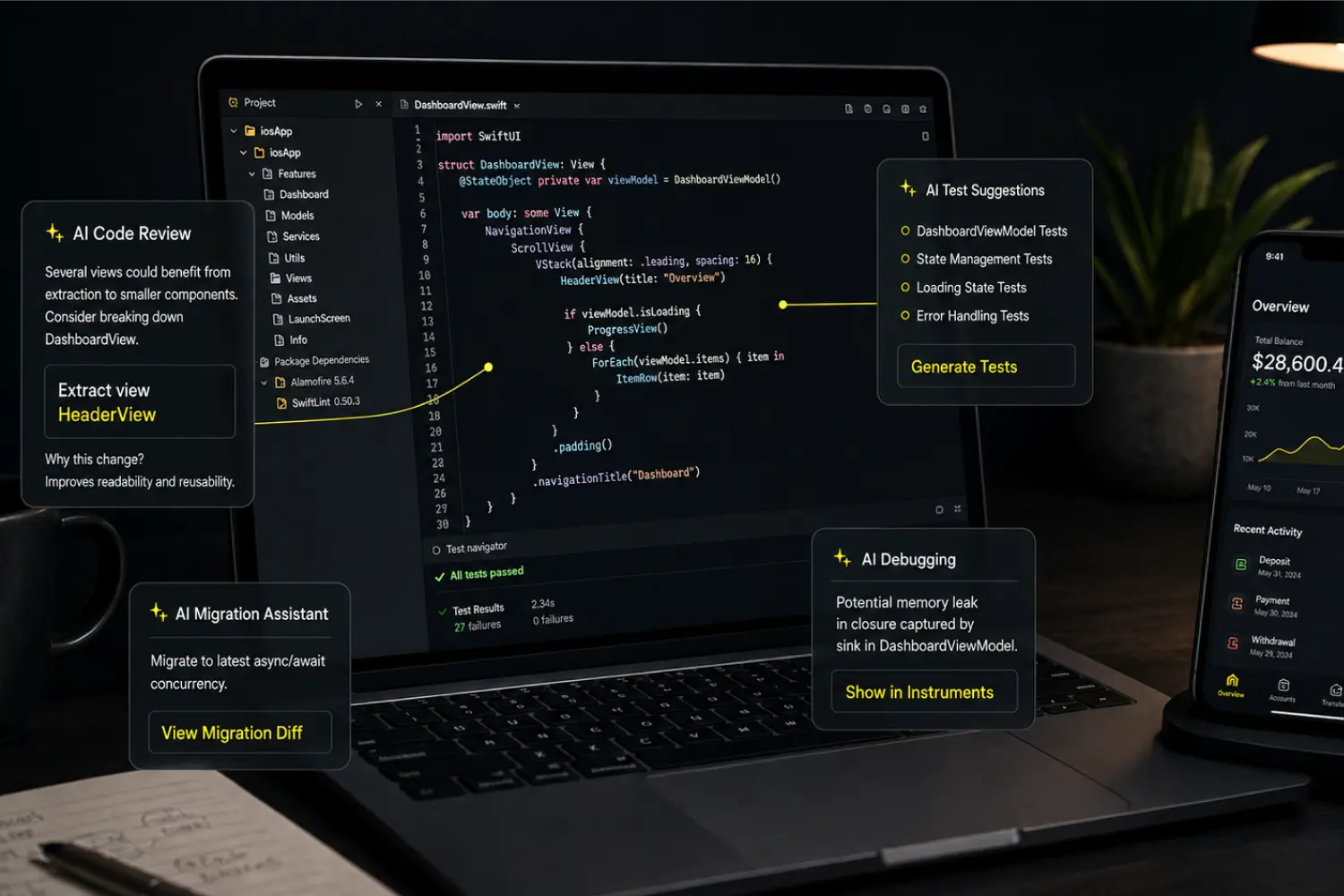
make it easier than ever to write, review, and debug code. For teams building modern mobile applications, these tools can speed up development, automate repetitive tasks, and even help spot potential issues earlier.
But here’s the catch.
When AI gives you an answer too quickly, you might stop learning how to find the answer yourself. And that’s where, from my perspective, things can get tricky.
I’ve seen junior developers copy code straight from ChatGPT and paste it into their project without really reading it or testing it properly. And when something breaks, which it usually does at some point, they’re stuck. They don’t fully understand what went wrong or how to fix it.
That’s not how you grow as a developer.
AI can help you move faster, but it can’t replace the experience you gain from debugging a messy problem or figuring out why a system behaves the way it does. Things like mobile app architecture planning, handling tricky edge cases, or debugging complex user flows still require real understanding.
This becomes even more important when it comes to team extension and outsourcing, where clients rely on external teams to deliver stable, high-quality apps from day one. If a team relies too heavily on AI without understanding the fundamentals, the result can be fragile code, hidden bugs, and a lot of problems later.
At the end of the day, AI should support your thinking, not replace it.
Why Problem-Solving Still Matters in AI App Development
Many junior developers today are fast, maybe even faster than I was at their stage. But fast code isn’t the same as a good code.
In the world of AI application development, you still need developers who can think critically and know how to make sure the app won’t crash the moment it scales from 10 to 10,000 users.
Writing code is just one piece of the puzzle. You also need to know when to refactor, how to handle technical debt, and how to design your app in a way that supports long-term growth.
Those are not things AI can do for you, at least not yet.
Let’s say your AI-generated code breaks something in production - it happens more than you’d think.
Now what?
Can you trace the root cause?
Can you isolate the bug, fix it without creating new problems, and understand why it happened in the first place?
That’s where real-world problem-solving kicks in. And unfortunately, that’s the part many new developers skip when they rely too heavily on AI in mobile app development.
The truth is, there’s more to app development than just getting the code rules right; it’s about the bigger picture. You need to think about things like app architecture, data flow, edge cases, and error handling. These aren’t things you can blindly trust an AI to handle. Even the best models today don’t understand the context of your entire codebase, your business logic, or your long-term product goals. That’s your job as a developer.
Whether you're deciding between frameworks like Kotlin Multiplatform vs Flutter, or trying to build out a scalable feature, the key is understanding the trade-offs, not just choosing what an AI suggests.
Developers who understand the “why” behind the code will always be more valuable than those who just know how to prompt the right answer. When something goes wrong, when an AI-generated snippet breaks a feature or causes a security issue, you need someone who can investigate, understand the root cause, and fix it. And that takes real thinking, not just copy-pasting from an AI chatbot.
From My Perspective: What Junior Developers Should Do With AI
If you’re just starting out, my biggest advice is this: use AI as a learning assistant, not a shortcut. I get it, it’s tempting when AI tools give you ready-made answers. But taking the extra time to slow down, analyze the code, and ask why it looks the way it does is exactly what will set you apart as a mobile developer in the long run.
Instead of copying and pasting snippets from AI tools, try to understand what the AI is suggesting and how it fits into your project. Especially in mobile app development, context matters a lot. Ask yourself things like:
- Does this solution fit the overall app architecture?
- Will this code handle real-world edge cases?
- What happens when the app scales and more users show up?
These questions build strong problem-solving skills, and they’re what turn junior developers into reliable engineers teams can trust.
Another important point: test everything. AI application development tools can speed up your workflow, but they won’t catch every bug, performance issue, or security risk. Running proper tests and reviewing the logic yourself will save you a lot of pain later, especially when apps move into production.
At our mobile app development company, Aetherius, we try to combine the best of both worlds. We actively use AI in app development to speed up repetitive tasks and improve efficiency, but we never let it replace human judgment. Our team focuses on understanding the why behind every decision, so the apps we build are not just functional, but robust, scalable, and ready to grow with our clients’ needs.
So if you’re a junior developer getting into AI-powered mobile app development, remember this: treat AI like a smart assistant, not your brain. Use it to learn, experiment, and move faster, but keep your critical thinking sharp. That’s how you build apps that last, and a career that actually grows with the technology.
As a CTO, Would I Choose an AI-Powered App Development Partner?
This is usually the real question:
Does using AI actually make development faster without sacrificing quality, or does it just create buggy code that causes more problems later?
From my experience using AI in mobile app development at Aetherius, the answer is pretty clear. AI works best as a strong assistant, not a replacement for experienced developers. It helps teams move faster, catch mistakes earlier, and automate repetitive work, but the real value comes when AI is combined with solid engineering judgment.
A good example is one of our healthcare industry app development projects. The client needed a mobile app that allowed patients to track symptoms and receive personalized health tips. The deadline was tight because they had to launch before a major health awareness campaign.
To meet that timeline, we used AI-powered app development tools, including code suggestions and automated testing. This helped speed up development of the feature that analyzes user input and provides recommendations based on trusted medical guidelines. Normally, that kind of logic takes time to implement and test properly, but AI helped us identify edge cases early and validate behavior faster.
The result? A stable, scalable mobile app delivered on time.
The client valued not just the speed, but the confidence that the app worked reliably from day one. Launching earlier also meant they could start collecting real user feedback sooner, which is a huge advantage in healthcare mobile apps.
That’s why, from a CTO’s perspective, AI-powered app development isn’t about replacing developers or cutting corners. And if you follow mobile app trends in 2026, it isn’t just about reducing costs anymore, it’s about choosing a partner who knows how to use AI responsibly, with the right people and processes in place.
When AI and experienced engineers work together, you don’t just build faster, you build better.

AI from Another Angle: Building AI-Powered Apps
We’ve talked a lot about how AI can help developers write code faster, but the truth is, AI is far more than just a coding shortcut. When used thoughtfully, it can power smart, AI-driven features inside mobile apps that genuinely enhance the user experience.
For example, we built an AI-powered app that generates personalized quizzes in seconds. Implementing this feature wasn’t just a technical trick, it required deep understanding of AI app development, solving tricky issues with PDF formats, and integrating safeguards to help users stay focused and engaged.
This project is a real-world example of developing AI apps to increase focus and speed up learning. You can see the full case study here.
At the end of the day, AI is powerful, but it’s the human expertise behind it that makes apps truly effective and scalable.
Final Thoughts: The Future of AI in App Development Needs More Than Just Speed
The truth is, AI in app development isn’t going anywhere. It’s only going to get more advanced. But as the tools get smarter, we need to stay sharp too. Fast code isn’t the same as good code. And developers who understand how things work behind the scenes will always be more valuable than those who rely entirely on automation.
If you're a junior developer reading this, my advice is simple: keep using AI. It’s awesome. But don’t skip the thinking part. Learn the fundamentals. Build your problem-solving mindset. Ask why something works, not just how. Because one day, someone will ask you to explain that code you copied, and you’ll need to know more than just “ChatGPT told me it works.”
If you’re leading a team, invest in mentorship. Teach your devs to ask better questions, not just write better prompts. That’s how you build teams that can handle anything, with or without AI.
At Aetherius, we don’t just use AI because it’s trendy, we combine it with real developer experience. Our senior team knows how to get the most out of AI in mobile app development without losing sight of the bigger picture: clean code, reliable delivery, and smooth teamwork. So when you work with us, you’re not just getting a team that uses the latest tools; you’re getting a partner who knows how to use them in ways that truly move your project forward.
Looking for a development team that uses AI the right way?
Contact us and let’s talk about how we can support your next project.
to Build Your App?